Minggu, 02 April 2017

Tribe

Hasil gambar untuk orang jawa tengah kartun

The majority of people in Central Java is Javanese. Central Java is known as the cultural center of Java, where in Surakarta and Yogyakarta are central Java royal palace that still stands today.A significant minority are the Chinese, especially in urban areas although in rural areas were also found. In general, they are engaged in trade and services. Chinese community has been mixed with Javanese, and many of those who use the Java language with a thick accent daily. We can feel the strong influence while in the city of Semarang and Lasem city located in the northeast corner of Central Java, even Lasem nicknamed Le Petit Chinois or Small Chinese City.Also in some major cities in Central Java also found Arabic-Indonesian community. Similar to the Chinese community, they are usually engaged in trade and services.On the border with West Java, there are also people who will be full Sundanese Sundanese culture, especially in the area of ​​Cilacap, Brebes and Banyumas. In the interior of Blora (the border with the province of East Java) there Samin isolated communities, the case is almost the same as the Baduy in Banten.

Traditional Weapons

Traditional Weapons in Central Java

Weapons premier Central Java and Yogyakarta Special Region in a manner almost identical outline, only differentiate morphology, shape and ornament of the traditional weapon, the keris.
Starting from ancient times, a dagger always be a symbol of the ability, either for men or women. In essence, a dagger together with other traditional weapons. Sharp-edged and used to cut, stab, or slicing. At the moment then, the keris is also used also as a symbol of self-identity, whether it is for yourself, family, or clan. Keris someone is not the same king with a dagger officer or servant of the subordinates.
Not just a dagger blades are not the same, but also details of its complementary jewelry is not the same device.


Manufacture


Keris has been made by some of the masters of the keris maker started since time immemorial. The combination of the steel material by meteorites, with wrought-folding techniques, make it physical beauty kris formed.
In the keris world, in the familiar sense of prestige daden. Daden namely the prestige or the prestige of the "light" which is formed by a spontaneous, without any engineering the master keris. According to experiments carried out, a dagger generally have a high radioactivity, because it requires a way to neutralize them.
One of the ways to neutralize the radiation hazards by bolstering kerisses plan into specific timber. The wood that is commonly used is wood Timoho, Trembalu, Sandalwood, Awar-awar, Galina tamarind, Liwung, or ivory
Beyond that, there is also the sense of prestige partner or artificial prestige. Prestige of a partner that is when started from the beginning of keris, the master kris want "light" the specifics of the dagger.
Characteristic of keris Solo, generally has a lot of accessories diamond studded gold and framed sandalwood fragrance. In a traditional Javanese culture keris is not simply calculated as well as traditional weapons that have the peculiarities of form and prominence.
Kris style Yogyakarta Solo referred ladrang being named branggah Ladrang have gills (sheath) that is more streamlined and simple without a lot of frills due to follow style senopatenan and Mataram sultans greatness. Shortly kris Solo (Ladrang) on ​​the blade more ornaments and shapes and motifs fill flavor because of the MPU Brojoguno Madura. Kris carving solo has a finer texture than in Yogyakarta. Also there was inequality of the handle of a dagger, luk, and so forth. Semasing have their own philosophy.

Traditional Weapons Kasunan Surakarta Hadiningratan


The view outside the palace describes as a weapon heirloom also shaped sacred. Being in the context of Surakarta Sultanate, meaning interpreted heritage as well as relics of the ancestral palace inherited the hereditary way in the King at the very beginning to the king afterwards.


So, which is the heritage not only in the form of weapons, but other objects that have their own meaning to the palace. However, in this context, would be a little discussed regarding inheritance possessed weapons of Surakarta Sultanate. 
Surakarta Sultanate has various types of weapons inheritance until now still being treated well. Most types of heirloom weapons in Surakarta Sultanate such as kris, spears, swords, trident, a rod of iron cannons, etc. Palace heirloom weapons were believed to put a magical sense to have the ability to have influence or prestige, and was calculated as well as sacred objects that need to be respected.

Kudhi for people Banyumas is a versatile tool among the benefits, with the exception of a sharp weapon that used to make self-protection from the dangers that terrorized. As well as a sub-culture of the people of Java, people Banyumas (and like most people of Java) in daily life always wear symbols or symbols. Emblem or symbols that can be objects, writing, speech or ceremony and arts, one of which Kudhi. Kudhi which was calculated to have linuwih power is only used as well as weapons talisman. Because this kind kudhi not often and it is hard to come by. People often call with Kudhi Banyumas Trancang

There are many types of kudhi in the Banyumas General Kudhi or often used for all interests. Kudhi has a length of 40 cm and a width of 12 cm. Then Kudhi glue, kudhi yan at the edges as if the form of fish glue. The smaller size of approximately 30 cm in length and 10 cm wide. This Kudhi role is to make booths as well as a fence. As well as the most recently Kudhi scythes, sickles that type in the middle has Weteng (abdomen). This type can be used among others for the sake of gathering firewood, browse (look for leaves) or for nderes (searching sap). Kudhi size is approximately 35 cm in length and 10 cm in width stomach.


Meaning

Kudhi meaning of sections divided into; end side, stomach, tartar and handles. The portions were not just play a role as well as cutting tools per se, but is a reflection of the character of the actual Banyumas. Mean when we refer by way of part-perbagian. The tip that egalitarian values ​​that exist in the Banyumas, in all forms of culture. This sort of thing is shown in the same form kudhi end also with weapons such as machetes, swords and the like from other regions. The shape of the abdomen provides that human life is not just to fill the mere lust but there are things more important that strive and work. Kudhi abdominal strength is great to be able to finish the job heavy-weights such as splitting or cutting a large object. Karah here represents that the display (read: the material) in fact can not be made as well as bad reference someone's good character. This sort of thing is not entirely intended that a good tartar and carved abdomen and will have a sharp edge (read: good). Average grip handles are where people live Banyumas in response to a definite must have faith.

Bondan Dance

This dance is a traditional dance of Central Java, which describes the love of a mother to her child. His name dalah Bonda Dance.

Do Tari Bondan it?


Bondan Dance is a traditional dance that describes the love of a mother to her child. The dance is a traditional dance that originated from Surakarta, Central Java. Which is characteristic of this Bondan Dance is property that is in use, the paper umbrella, kendil and baby doll in carrying dancers.Historically, this Bonda Dance is a dance that must be played by the development of the village to show his true identity. With this dance it will be seen how their time to be a mother and caring for their child. So that as women are not only flawless but also must be caring, compassionate and protective of her.Tari Bondan have 3 types of dances that Cindogo Bonda Dance, Dance and Dance Bondan Bondan Mardisiwi Mountains / Dance Bondan Tani. Each type Dance Bonda has its own characteristics, including the stories in dance, property that is in use, and the costumes are in use. But still not leave the dance depicting the original is about love of a mother to her child. Especially for Cindogo Bonda Dance tells a mother's love for her child, but the child who loved the deceased. Can say Tari Bondan more nuanced cindogo sad.In the show, the dancers danced with Dance Bondan holding a baby doll with one hand while his other hand holding a paper umbrella. In Tari Bondan generally have the implied meaning in every movement. One scene that characterizes is when the dancers dance on a kendil. At the scene of the dancers must keep their balance on top kendil so kendil dipijak not broken. Besides the dancers must dance on kendil while mememutar - rolling kendil are trampled and play they carry umbrellas.For Bonda Dance performances by dance Mountains differ slightly bondan cindogo and mardisiwi. In the show, Dance Bonda women describe Mountains village in the mountains or the village peasants in fields or farm work. After dancing using the farmer equipment dancers bertaninya undress and change clothes in use in Tari Bondan. Then the dancers dance with other Bonda Dance movement.In Bonda Dance performances are usually accompanied by the musical accompaniment. At the beginning of this dance is accompanied by song dolanan, but in its development of this dance is accompanied by a complete gending. In the show, the dancers Tari Bondan in the dressing dressed like wiron cloth, crown, camisole clothes and wear At the top of the bun. But for Dance Bondan initially used clothes mountain village girl.Property that is used in this dance generally use paper umbrella and a baby doll. In Tari Bondan cindogo usually use kendil in the dance, but to Tari Bondan mardisiwi usually do not use kendil in the dance. In addition to Tari Bondan mountains usually begins using that in the carrying basket, farm implements, and wearing a hat on his head. But after dancing using the tool bertaninya then the dancers take off our clothes and hat farmer, then input into the basket and replace with other Bonda Dance property.


In this Bonda Dance not only have value - artistic value but also the moral values ​​which we can learn in it. So it must remain on guard and preserve that is not lost along with the changing times. This dance is already rare in the show, but still we can meet in a variety of cultural festivals in order to introduce the traditional arts in Central Java, especially in Surakarta as the area of ​​origin.

Sintren Traditional Dance

Sintren Traditional Dance Of  Central  Java

Central Java, Nusantara Art, Traditional DancesThis dance is a traditional dance classics from central Java. His name is Sintren Dance.


By Negeriku Indonesia

Is that Sintren Dance? Sintren dance is one of the traditional dances that come from the north coast of Central Java coast and west Java. in addition to the dance movement, dance is also famous mystical element in it because of their special ritual for pemangilan spirits or gods. Sintren dance is scattered in several places in Central Java and West Java in Cirebon, Majalengka, Indramayu, Brebes, Pemalang, Pekalongan and Banyumas.Historically, this dance originated from Raden Sulandono and Sulasih romance that did not get the blessing of the parents Raden Sulandono. So Raden Sulandono instructed by her mother to be imprisoned and given a piece of cloth as a means to meet Sulasih later after the completion of his hermitage. While Sulasih ordered to become dancers in each village clean event that is held as a condition to meet Raden Sulandono.When folk performances are held to enliven the village clean, that's when Sulasih dancing as part of the show. That night during a full moon, Raden Sulandono came down from his hermitage by means of hiding while carrying cloth given by her mother. At the time Sulasih dancing, he was in the power of the Goddess Rantamsari rasuki so trance. Seeing as it was Raden Sulandono throws the cloth so that Sulasih fainted. With the strength of which is owned by Prince Sulandono, then Sulasih can be taken away and both make dreams - his to unite in love. Since then designations Sintren and balangan emerged as a forerunner of this Sintren Dance. Sintren term is the current state of trance or trance dancers experience. And the term Balangan is currently Sulandono throws Raden fabric that is given by his mother.In Sintren dance performance usually begins with Dupan, namely ritual praying together to invoke protection from danger to the Lord during the show. There are some parts in the dance performance Sintren namely Plenary, Balangan and Temohan. At the plenary part is the part where the handler prepares a Sintren that will be made by accompanied by four players as a Lady. Originally a dancer who made Sintren still wearing ordinary clothes. In this section begins with a chant by putting both hands prospective dancers Sintren above the smoke of incense, after the dancer tied with a rope around his body. Then prospective dancers Sintren inserted into the chicken cage along with clothing and supplies dressing her. Once finished it will be marked with kurngan shaking and confinement will be open. The Sintren dancers are ready to dance.


By Negeriku Indonesia


At the moment the audience Balangan is throwing something towards dancers Sintren. When the dancers hit by it then the dancer Sintren going to faint. Then the handler approached the dancers fainted and chant and rubbed her face so that the spirit dancers angel came again and continue dancing. Viewers who threw earlier are allowed to dance with the dancers Sintren. In Temohan part is the part where the dancers Sintren with a tray approaching the crowd to ask for a gesture of thanks to the money seiklasnya. To be a dancer Sintren there are several requirements that must have prospective dancers, mainly as a dancer Sintren should a girl or still virgin because Sintren dancers must be in a state of purity. Besides the dancers Sintren enjoined to fast beforehand, so that the dancer's body remains in a state of purity and behaved herself not to sin and fornicate. So it can be difficult for Ataun spirit god who will enter his body.In the show, Clothing used by dancer Sintren is clothing show, namely sleeveless commonly used in the puppet dance. At the bottom usually use cloth cinde jarit and pants. For the head usually used diadem, namely ornament garlands of jasmine on the right side and koncer in the left ear. Accessories are used usually are belt, sampur, socks and black / white. In addition it also as a characteristic of a dancer Sintren are sunglasses that functions as a blindfold. Because Sintren dancers always closed my eyes as trance or trance, but it is also as beautify penampilan.Dalam Sintren Dance performances are also accompanied by musical instruments like Gending. And accompanied by Javanese songs. However, at this time the instruments used are modern instruments such as orchestra. 

During its development, Dancing Sintren started sinking line with the times. This dance is rarely in the show, even in the area of origin. Along with the development, Dancing Sintren been many changes to the original form. Many creations in order to add this dance looks interesting. This dance is a dance that is rare and seldom found. Apart from the artistic dance also has value - the value that we can learn in it. This Sintren dance we must preserve and maintain its existence as a cultural heritage of our nation.

By Negeriku Indonesia

Gandrung Dance (Infatuated Dance)

Hasil gambar untuk Tari Gandrung
By Indonesian Wonderful

Infatuated dance is a performing arts dance that originated from Banyuwangi, East Java. This dance appears as the embodiment of public gratitude after each harvest. Infatuated still one genre with Tap Tilu from West Java, Central Java and Tayub from the western part of East Java, Lengger of Banyumas and Joged tube of Bali. Dominated art form of dance with this distinctive orchestration popular in Banyuwangi region located on the eastern tip of the island of Java. Because of the popularity, has become the hallmark of the region. Nothing wrong Banyuwangi always identified with the infatuated. See it at different angles Banyuwangi region will often many sculptures dancer infatuated.
The dance is accompanied by music played by a female professional dancer who danced with the guests, especially men in pairs. Musical accompaniment was a typical blend of Javanese and Balinese culture. While the accompanying music equipment consists of a gong, kluncing, violin, drums, and a pair of kethuk. Sometimes interspersed with saron Bali, angklung, or tambourine as a form of creation and accompaniment electone.Gandrung often performed at various events, such as marriage, pethik sea, circumcision, seventeen and events of other formal and informal, both in Banyuwangi and other areas. According to custom, the full performances starting around 21:00 and lasted until dawn.


Hasil gambar untuk tari gandrung jawa tengah
By Sandra's Project

Sabtu, 01 April 2017

Gambyong Traditional Dance

Gambyong Traditional Dance, Dance Of Central Java
By Negeriku Indonesia

Central Java, Nusantara Art, Traditional DancesJava community famous for softness and adaptability in behavior. The dance is an illustration of the softness and flexibility Javanese woman. His name is Gambyong Dance.Is that Gambyong Dance?Gambyong Dance is one of the traditional dances of Central Java. This dance is usually done by several female dancers with beautiful movement and a dance Gambyong anggun.Tari development of traditional dance that dance Tayub earlier.Historically, this Gambyong Tari name taken from the name of a dancer named tledek Gambyong. Besides kecantikanya, gambyong also has a beautiful voice and graceful movements so many recognizable by the public at that time. At the request of Sinuhun Pakubowono IV who ruled kesunanan Surakarta, gambyong hold performances in the Surakarta palace. Since then dances brought by gambyong is called Dance Gambyong.
By Negeriku Indonesia

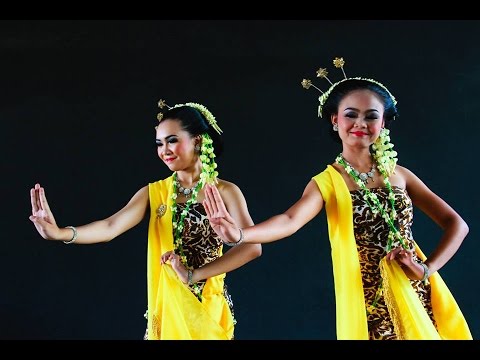
Before the Surakarta reorganize and standardize the structure of the movement, dance is a folk dance Gambyong as part of a ritual before planting to be given fertility and give a bountiful harvest. Having entered the palace kelingkungan Dance is often made Gambyong entertainment and dance welcoming the guest of honor. But along with the development of this Gambyong dance started in the show again to the general public and became one of the traditional dances of Central Java.Movement in Dance Gambyong better play the movement in the legs, arms, body and head. For the basic movement that characterizes Gambyong Dance is head and hand movements. Dancer eyes frequently towards the fingers along with the movement of his hands. On the movement of the foot to move in harmony. With a slow tempo movements graceful dancer depicts a woman of beauty and tenderness.At the show, Dancing Gambyong consists of three parts, namely forward beksan (initial movement), dances (main motion) and backward beksan (closing movement). While dancing, the dancer often exhibit elegant facial expression with makeup and smile hello gorgeous. Besides dancer gambyong also in the dressing with a gorgeous dress like a tank on top and batik fabric on the bottom. On equipped with a muffler that is in use for dancing. Additionally decorated with accessories such as bracelets, earrings and flower in the chain. on the head is usually used bun and a face in makeup with makeup Javanese thus adding to the beauty of the dancers. For the dancers gambyong fashion is synonymous with shades of yellow and green as a symbol of prosperity and fertility.

Hasil gambar untuk Tari Gambyong
By Negeriku Indonesia

At the show, Dancing Gambyong accompanied by gamelan musical accompaniment. The instrument used was kempul, drums, kenong, gong, gender and others - others. a very important instrument in accompanying this dance is the drum, because the movements in this dance must be in sync with the sound of drums. So in need drummers drums that combines movement and aligning with other instruments. During its development, Gambyong Dance is indeed originated from the dance tledek. But after reorganized and standardize its movements, dance Gambyong become one of the traditional dances of community pride, especially Surakarta, Central Java. This dance is often displayed on a traditional wedding ceremony, welcoming guests and cultural art events in Central Java.

Hasil gambar untuk Tari Gambyong
By Negeriku Indonesia

Bambangan Cakil Dance

This traditional dance one dance from Central Java in the capture of puppet story. His name is Bambangan Cakil Dance.

Is Cakil Dance Bambangan it ?


Cakil Bambangan Dance is a traditional dance in adobsi of one scene in a puppet story. The scene is a scene of war diadobsi flower, which recounts the battle between knights and giants. This dance is one of the classical dance in Java, especially Central Java.
In this Cakil Bambangan Dance tells the battle between good and evil. These two properties are depicted in the dance movements of the characters in the dance. Where is the kindness that existed at the heroes portrayed by the movement that was soft and gentle. While crime in a giant figure in describing the movements that are rough and violent. Characters in the puppet that is used in this dance is Arjuna as a Warrior, and Cakil as a giant. This dance contains a high value philosophy where crime and insolence will lose with kindness.
Dance movements in Cakil Bambangan is very artistic. Although in the adoption of the puppet story, the dance is not in the pull of the conversation. However, messages and stories in this dance still conveyed through the flow movement of the dancers. To portray the character in Cakil Bambangan Dance is certainly no requirement - certain conditions in order to look attractive dances, such as physical dancer, flexibility in the dancing, and the nature of the dancers themselves. To portray heroes usually have to have physically handsome and graceful / meekness. As for playing the character cakil requires agility in dancing because of its violent and thus require more movement. In addition cakil dancers also need to be flexible, because the movement which tends attractive cakil figures.
In the show, Dancing Bambangan Cakil usually not only played by two people. But there are several supporting roles like a giant army and female dancers as a couple knight. The supporting roles are usually played at the beginning of the show that the show looks stiff and more interesting. This dance is accompanied by musical accompaniment srempengan, Ladrang Cluntang Sampak Slendro barrel. The sound of drums in the background music is very important in this dance. As in other Javanese dance, drum sound to be in sync with the movement of other dancers and musical accompaniment. Clothing that is in use dancers usually used clothing on the Uwong puppet (wayang), but it also cosmetology that is in use as well as wayang wong. All were in sesuikan with the character played by the dancers.
During its development, Dancing Cakil Bambangan is often displayed with different packaging each group dance or performance. Some creations are done in motion or order to show additional dancers look attractive and not look stiff. Cakil Bambangan dance is often displayed on a variety of cultural events, welcoming guests of honor or cultural festivals. Because the dance movements are so artistic and value - the value in it that is so typical. This dance is a traditional dance of Central Java which should be preserved.